Ganvie: African Stilt Metropolises
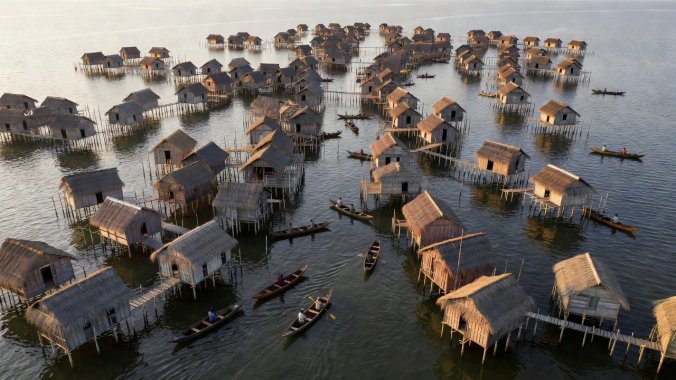
Situated in the center of Lake Nokoué in southern Benin, Ganvié is home to roughly 35,000 Tofinu people. Unlike Venice or Amsterdam, where water surrounds islands of solid earth, Ganvié is built completely on wooden stilts directly above open water.
Historical Origins & Defense Geography
Ganvié was established in the 17th century by the Tofinu people fleeing raids conducted by the Kingdom of Dahomey. Religious taboos forbade the Dahomey army from venturing onto water or wetlands. Recognizing that open water offered an impenetrable sanctuary, the Tofinu took to Lake Nokoué, pioneering an entire amphibious society known as the "Water People."
Stilt Selection: Ebony & Red Mangrove
Because the stilt timbers in Lake Nokoué alternate between being submerged and exposed as lake levels rise and fall by up to 1.4 meters each season, builders select rot-resistant African blackwood (ebony) and red mangrove (Rhizophora mangle). The tannin-saturated sap of red mangrove provides natural chemical armor against insects and rot.
Modular Structural Framing
Houses are framed using split bamboo walls and woven palm thatch (raffia) roofs. This ultra-lightweight structural dead weight eliminates excessive sinking into the soft lake mud, while open wall weaves allow coastal tropical squalls to blow straight through without blowing down structures.
The Acadja Fish Farming System
Ganvié's aquatic economy relies on acadjas—man-made marine enclosures crafted from dense forest brush staked into the lake bed. Microscopic algae and invertebrates flourish on the submerged twigs, providing food for wild tilapia and mullet without artificial feed.
Daily Urbanism on Pirogues
In Ganvié, every aspect of civic life takes place on the water. The primary transport vehicle is the pirogue, a narrow canoe carved from solid mahogany or cedar logs:
- Floating Markets: Women vendors gather in central open basins every morning, paddling dugout canoes loaded with smoked fish, yams, fruits, and spices.
- Civic Infrastructure: Schools, churches, mosques, medical clinics, and town halls are elevated on massive timber clusters. Schoolchildren navigate between classrooms by canoe.
- The Sole Dry Plot: The cemetery is the single parcel of dry terra firma in Ganvié, situated on a small natural sediment mound at the village periphery.
Hydrological Challenges in Lake Nokoué
In recent decades, opening the artificial Cotonou channel to connect Lake Nokoué directly to the Atlantic Ocean increased the lake's salinity. While beneficial for certain shrimp fisheries, this saltwater intrusion accelerated decay in traditional freshwater stilt timbers and degraded the lake's delicate freshwater ecosystem.